Sector commitment and interest
Trans-Inclusive Culture has continued to generate widespread interest across the UK and international cultural sector.
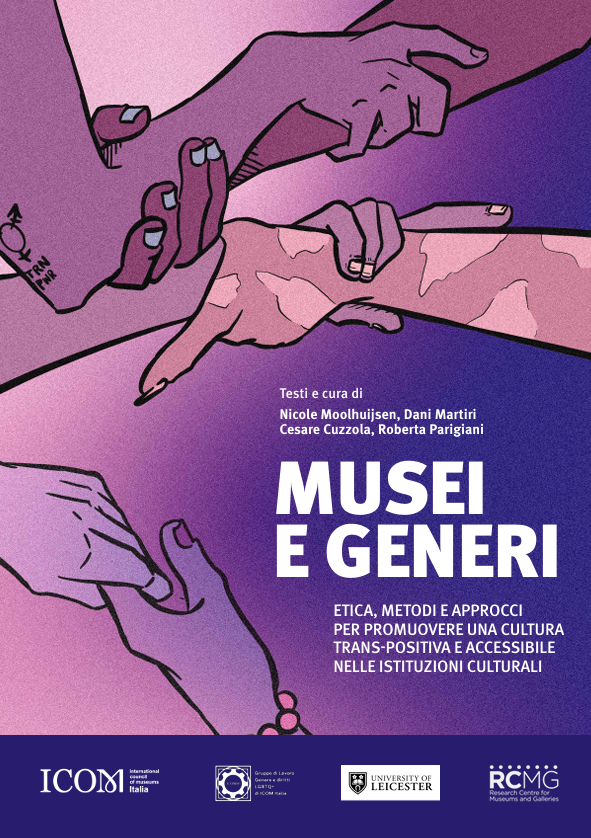
In June 2025, the International Council of Museums (Italy) launched their adaptation and translation of Trans-Inclusive Culture developed specifically for culture practitioners and organisations in Italy, at a packed event held at the Fondazione Querini Stampalia (Musei e generi. Etica, metodi e approcci per promuovere una cultura trans-positiva e accessibile nelle istituzioni culturali).
The project has also been presented at conferences and training events in Austria, Taiwan, Romania, Italy and at the Museums Association annual conference in Cardiff in November 2025.
Research phase
With this phase of Trans-Inclusive Culture designed as a collaboration between multiple partners, contributors and supporters with different forms of expertise, experience and insight around trans-inclusion, the RCMG team undertook research over the summer with staff and leaders from across our 11 partner organisations to generate a deeper understanding of existing practice, knowledge gaps and areas where further support and guidance is needed (within partner organisations and across the sector more widely).
This research phase included a series of online focus groups with staff at each partner organisation (typically 60–90-minute sessions on the topic of trans inclusion with staff, volunteers and leaders with wide ranging responsibilities). 53 staff participated in 11 focus groups alongside a small number of one-to-one in-depth interviews.
We also wanted to give the opportunity to contribute to the research phase to staff members who may not have been able to attend the focus groups/interviews, or who may have preferred to contribute anonymously (without disclosing their name, role and/or organisation they work for). For this, we developed an online self-completion survey which was circulated to all staff at each of the partner organisations. The survey allowed us to collect 70 additional responses.
Key findings
The research findings included a wide range of views from staff members. Some felt very confident about their organisation’s track record on trans-inclusion, citing a number of successful public-facing projects or positive examples of organisational culture whilst others had less experience of developing trans-inclusive work. Some colleagues raised questions around how to advance trans inclusion in ways that recognised the rights of other groups with protected characteristics and repeated the desire to take this work forward in ways that are fully inclusive. A very small number of trans-exclusionary views were also expressed via the online survey. The RCMG team found the research phase enormously valuable as a means to generate a deeper understanding of the sector and partners’ needs that can be summarised under 4 overarching findings:
- Sector commitment – There is an overwhelming commitment to advancing trans inclusion across the partnership and wider sector. Organisations want to know how to work in ways that benefit trans communities and that advance trans inclusion as part of their long-standing commitments to inclusion for all.
- Knowledge gaps – further work is needed to address gaps in organisational knowledge and understanding (amongst staff and volunteer teams, leaders and boards of trustees) around how to take forward high quality, ethically-informed and impactful trans-inclusive practice in ways that advance inclusion for all.
- Risk aversion and uncertainty – The fast changing social and legal context – alongside widespread mis- and disinformation around trans inclusion – is contributing to organisational risk aversion and uncertainty and, in some organisations, to inaction.
- New resources and additional guidance – The research pointed to the specific resources, tools and additional guidance that are needed to address the knowledge gap and build capacity and confidence amongst individuals, organisations and the wider sector.
Co-production phase
Following the completion of the research phase, the team moved into a phase of co-production. A residential for project partners at the University of Leicester (11-12 November) brought together sector leading experts in the law, equalities, ethics, trans inclusion, visitor experience, accessibility, community engagement and partnerships, cultural leadership, curation and interpretation to work collaboratively to co-produce a suite of new resources and updated and expanded guidance that can meet the needs of the sector and equip organisations to take trans inclusion work forward with confidence.
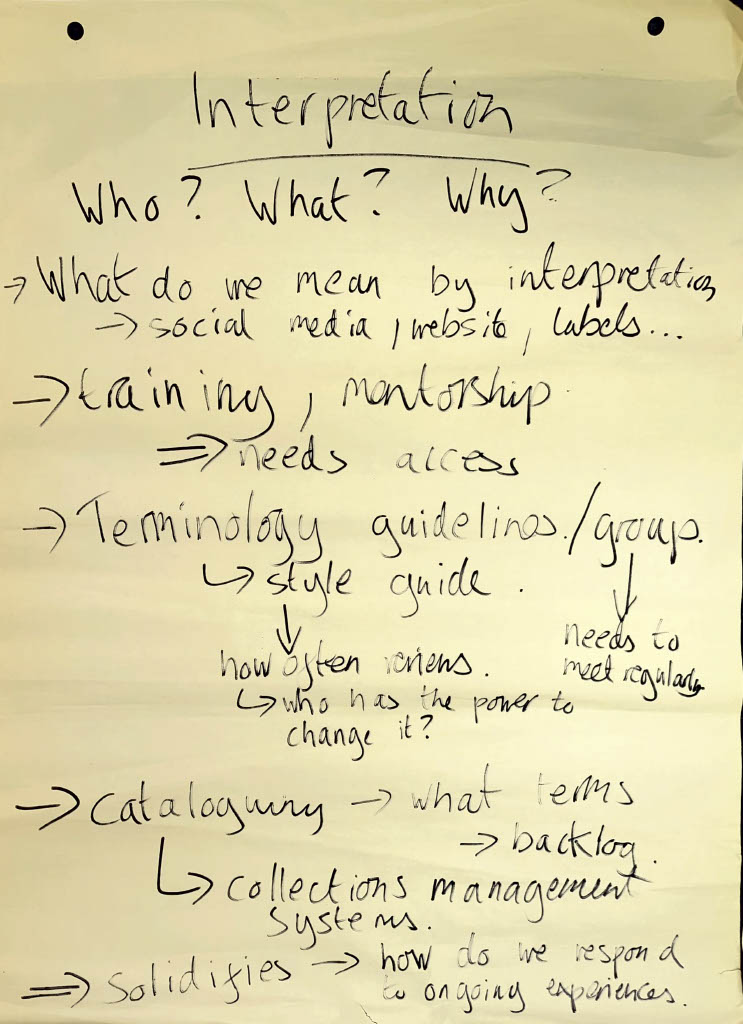
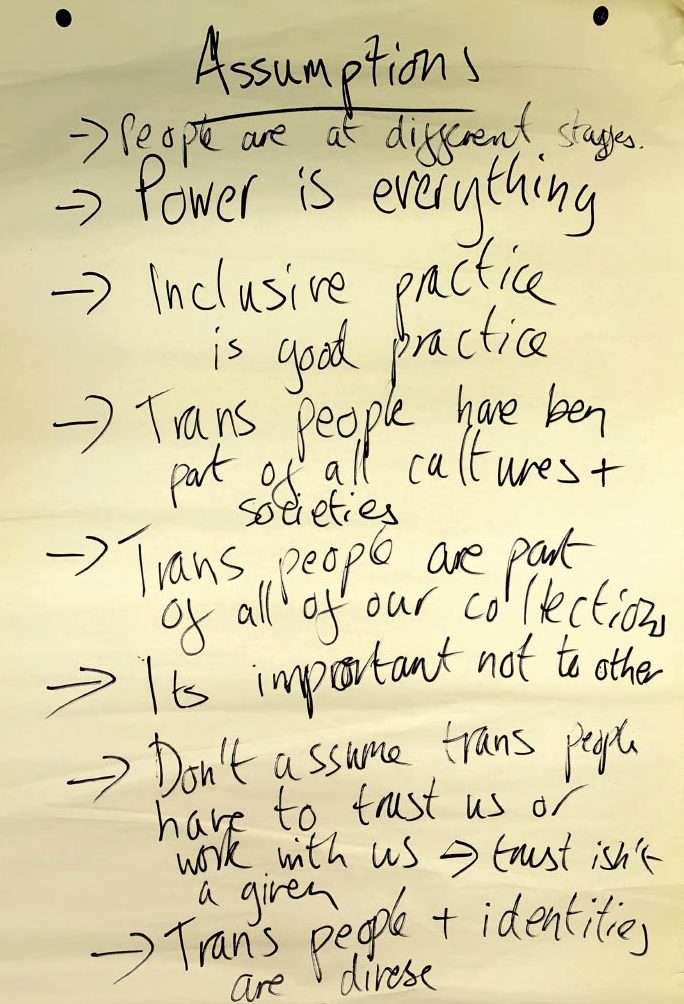
Over the coming months, the RCMG team will continue to work with our expert contributors and partners to build, hone and test these resources prior to sharing with the sector in Spring 2026.
RCMG, December 2025